
Felix Hirsiger is all in: How Far Belief Can Take You
An Interview with Felix Hirsiger By Ollimono Magazine | Published 03/11/2025
What does it take to keep going when belief costs you something? For Felix Hirsiger, it takes persistence, risk, and a clear sense of purpose. He built a racing career through uncertainty, financed a season on trust, and now runs a growing car business while competing in one of the most demanding racing championships in Europe.
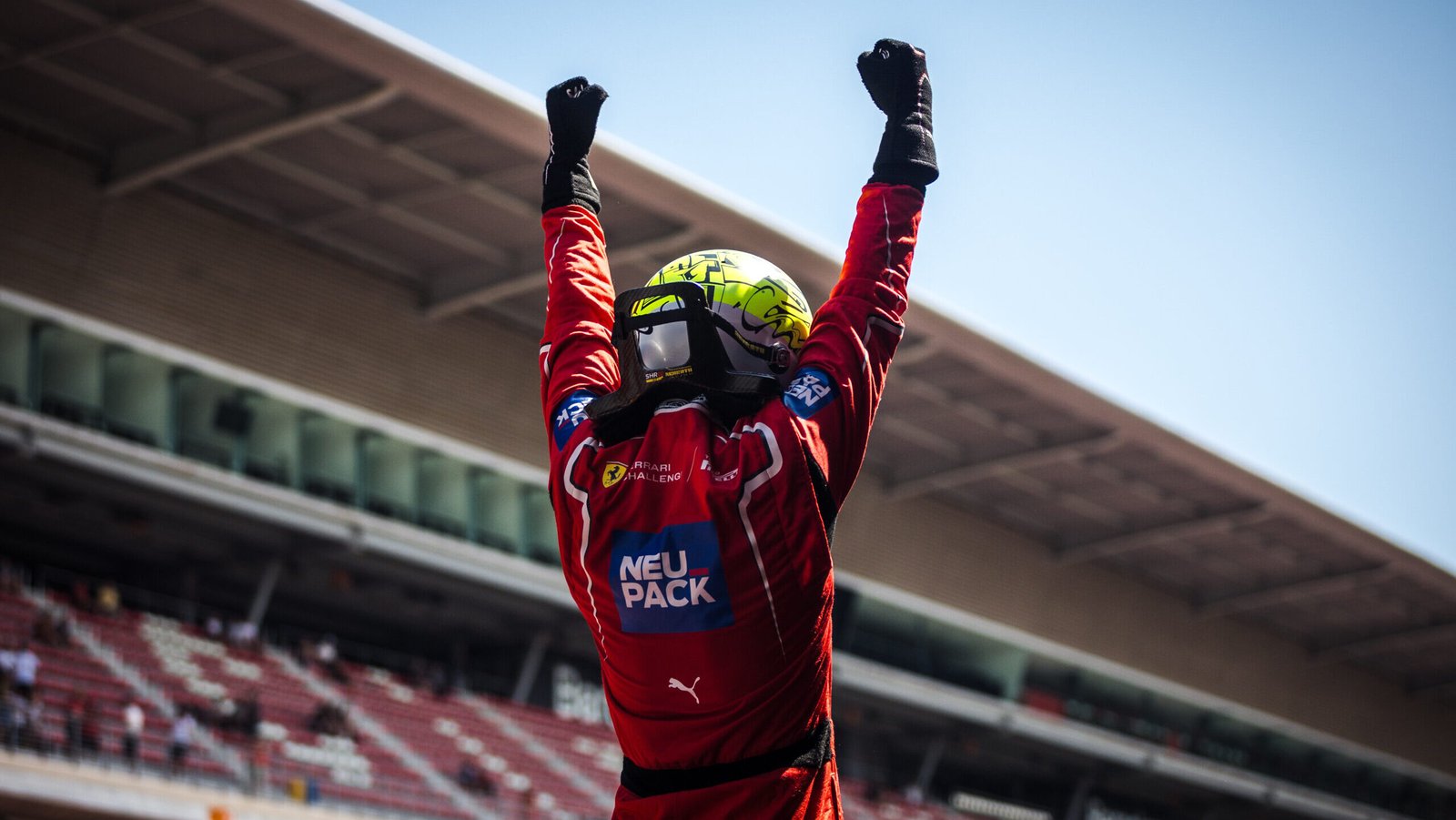
During our conversation, he spoke openly about pressure, setbacks, and the choices that shaped his path. He explained how he trains his mind to stay sharp under load, how he approaches responsibility, and how much consistency matters when everything else is unpredictable.
Felix’s story is one of action over words. It is about showing what belief looks like when it turns into daily work, small improvements, and the courage to keep going even when the outcome isn’t clear.
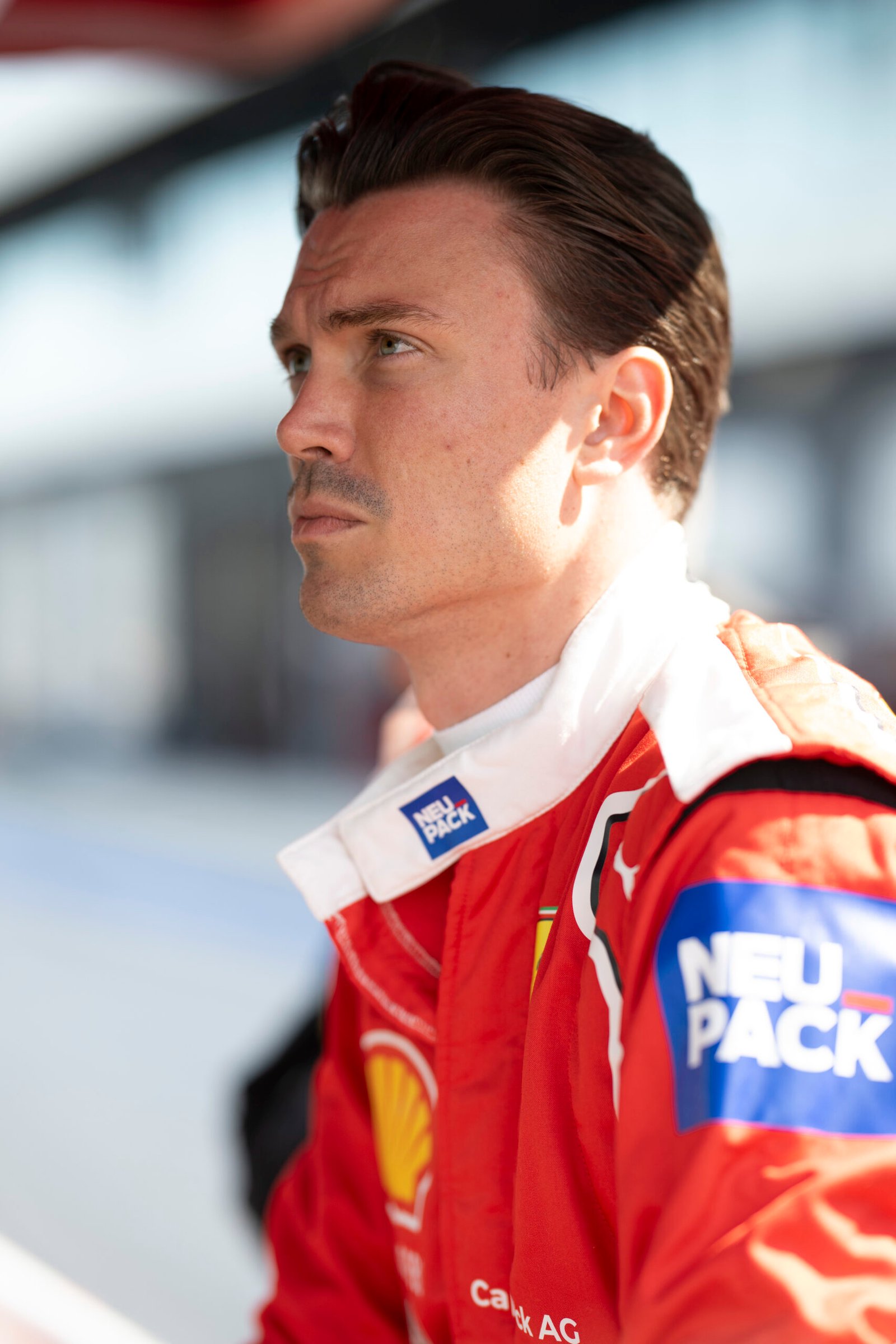
Mental Capacity as a Skill
“Your mental capacity in the car is the most important,” he says. “If you have more mental capacity than others, you can focus on driving and improving during the race.”
Felix Hirsiger approaches this as a system. Training, for Felix, involves both the body and the brain.
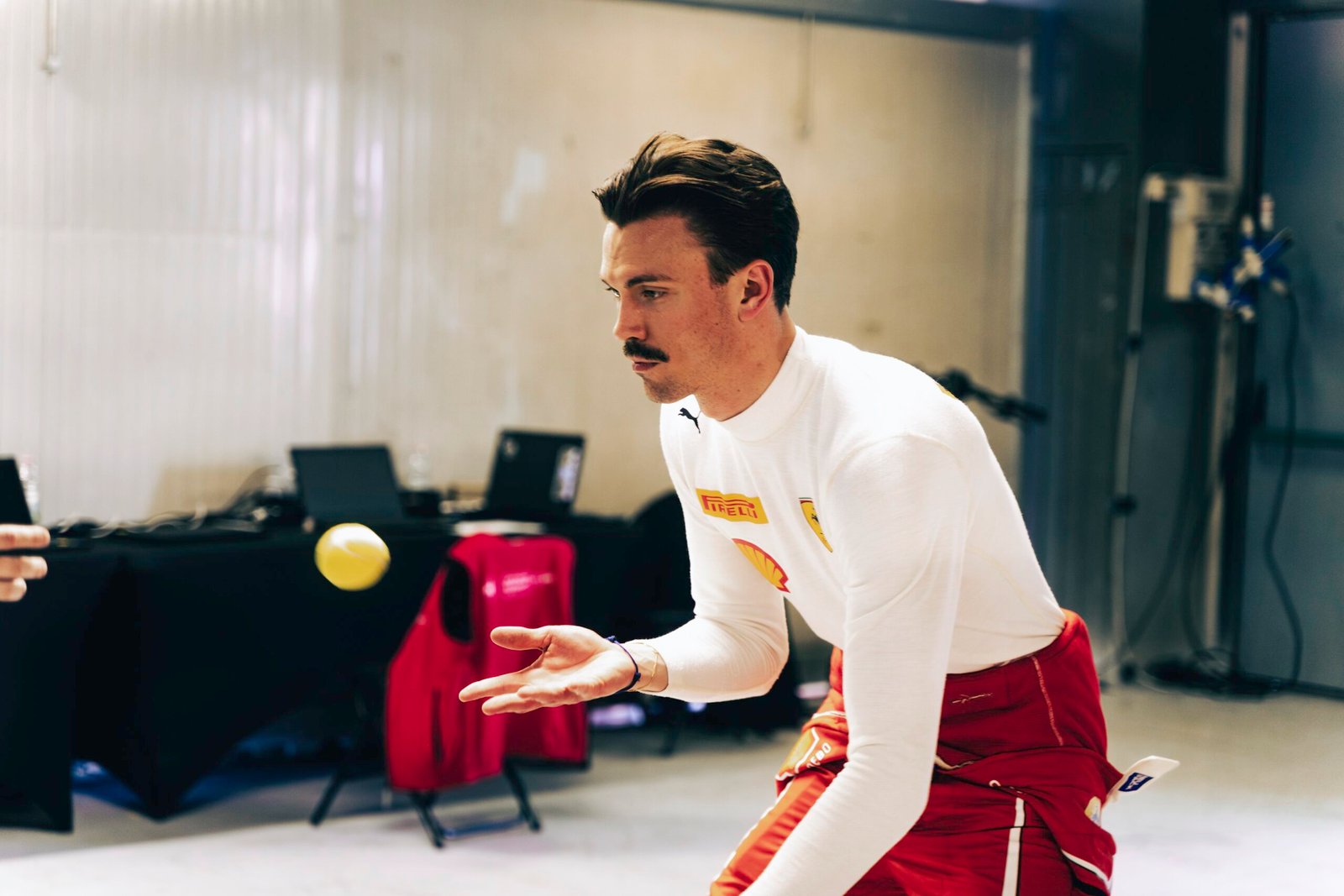
“I train under physical load and then add cognitive work,” he explains. “You finish a hard session, then you sit down and solve color puzzles or reaction games. You’re tired, but that’s the point. It’s about teaching the brain to stay clear even when you’re exhausted.”
He smiles when describing the process. “At Formula Medicine in Italy, they’d make us run until we were done, then give us mental drills. Words written in one color but meaning another, timed reactions, memory challenges. It’s pure stress training.”
For him, the key is processing information while things are still moving. “You have to process a mistake, understand it, and move on in milliseconds,” he says. “If you stay in the last corner, the next one will already be there.”
Belief that costs something
Felix’s story is built on choices that required belief.
When the 2020 season collapsed under COVID restrictions and several sponsors pulled their funding, Felix found himself with no way to continue racing. “It was like a switch — overnight everything was gone,” he says. “You train, prepare, and then realize that none of it might matter.”
The offer to keep him on track didn’t come from a negotiation or a pitch. “My friend told me when we went for a coffee, ‘You’re not stopping. I’ll cover the season, and you can pay me back when you can,’” Felix recalls. “It wasn’t a gift. It was belief.”
That belief came with risk. It meant stepping into a season financed by trust and facing the real possibility of failure. But he accepted it. “It made me comfortable with uncertainty,” he says. “You learn to operate inside it instead of avoiding it. You stop asking what if and start asking how.”
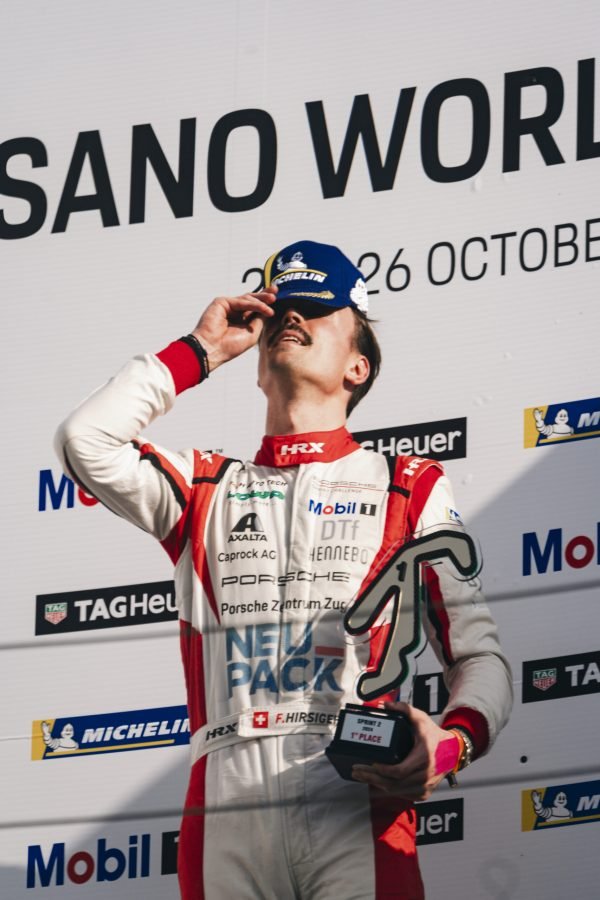
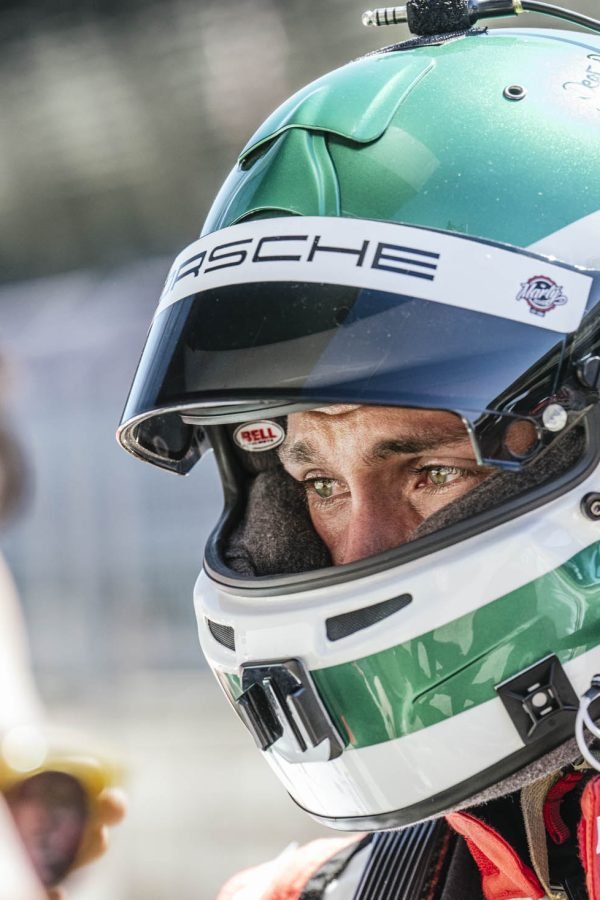
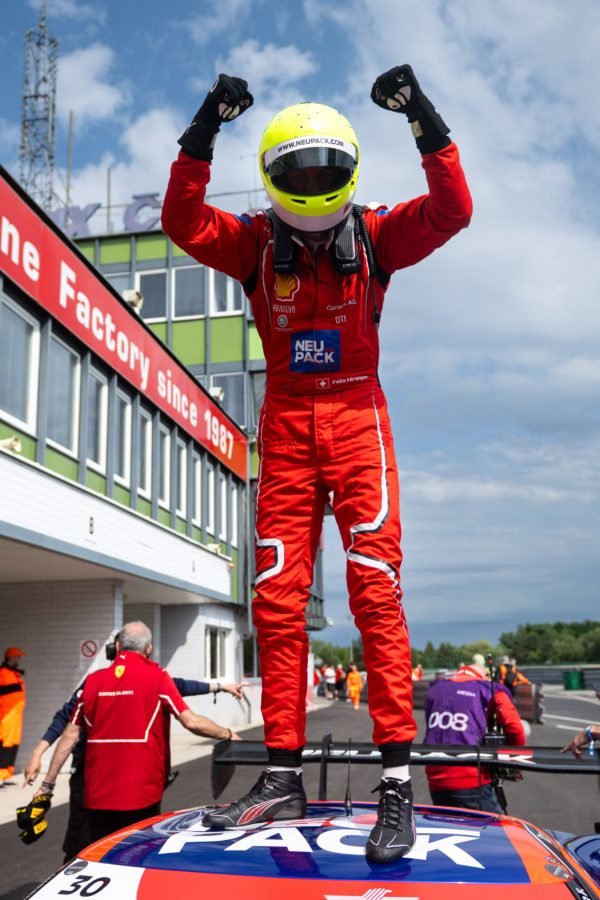
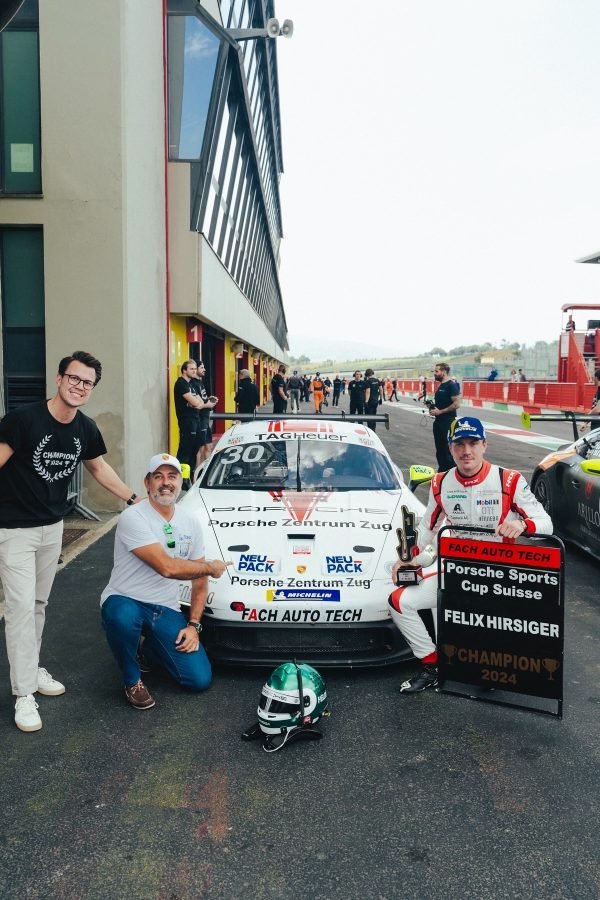
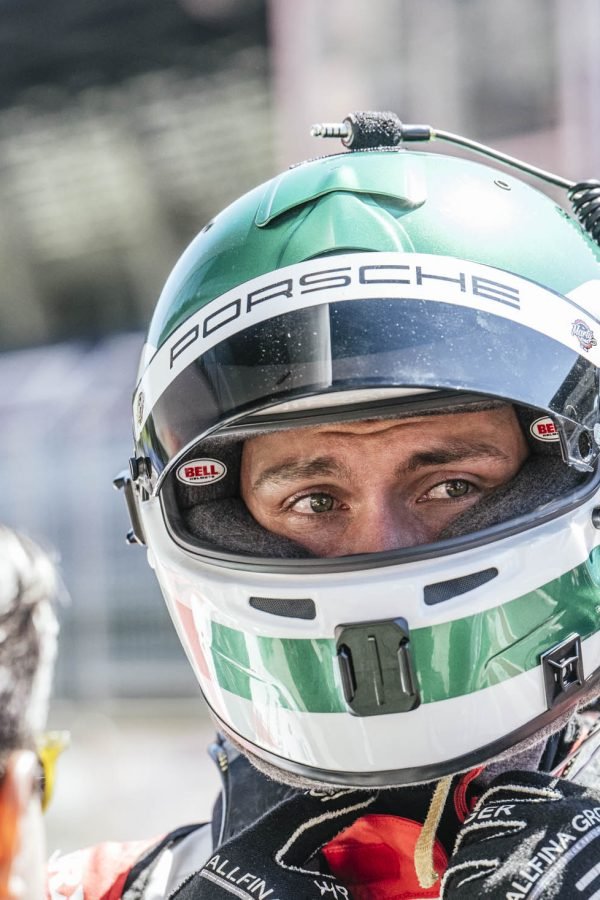
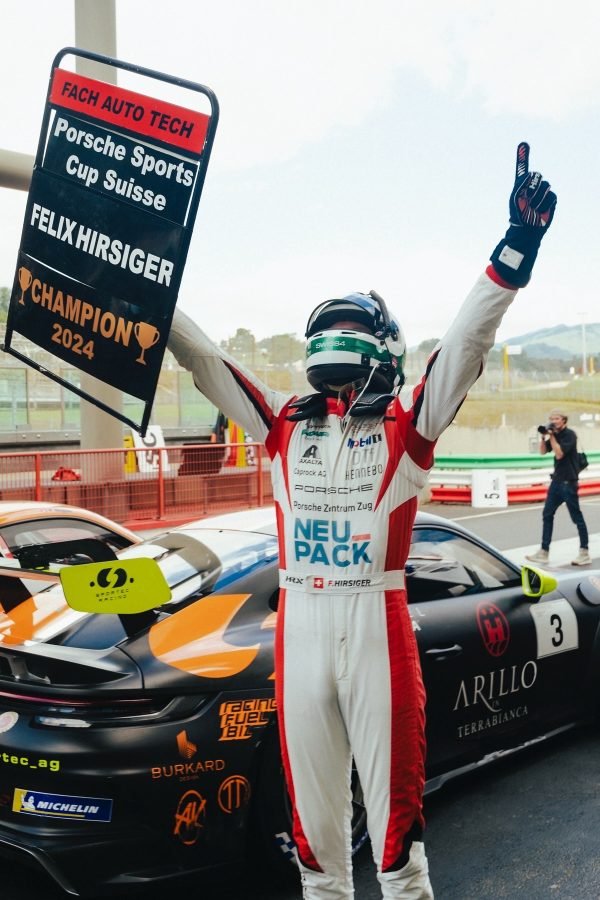
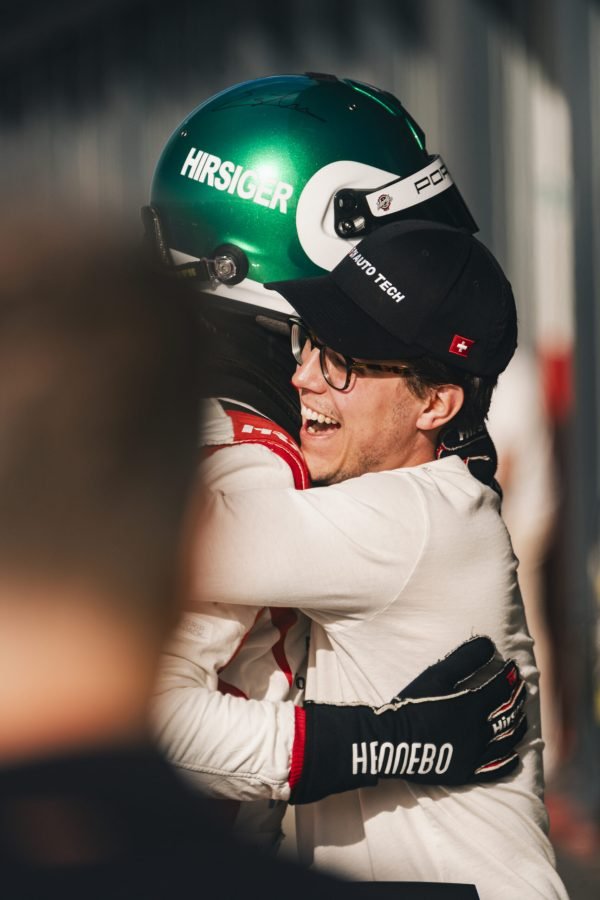
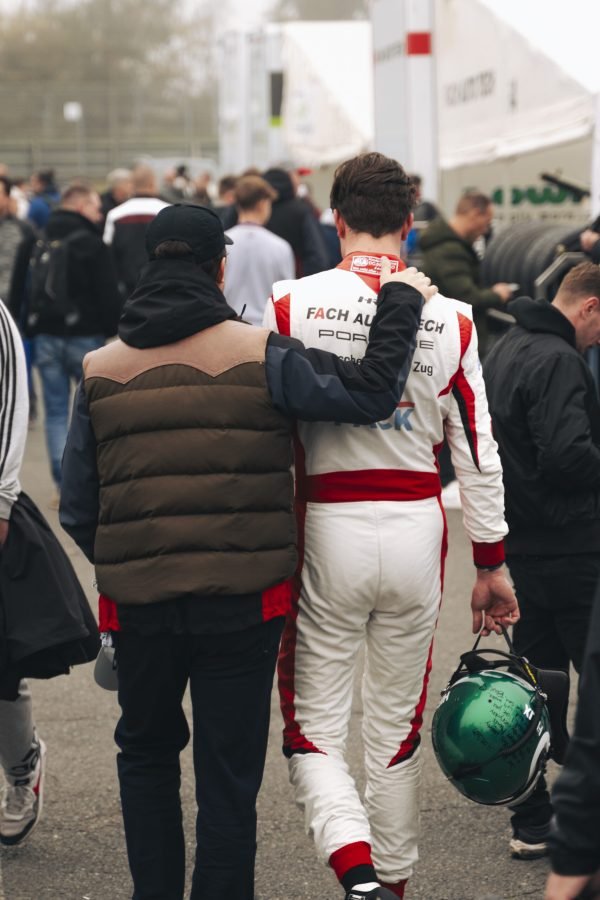
Two years later, he had paid everything back and another year later, 2024, he won the Porsche Sports Cup Suisse championship in the Porsche GT3 Cup. “That period shaped me,” he says. “It taught me about resilience, responsibility, and how far belief can take you.”
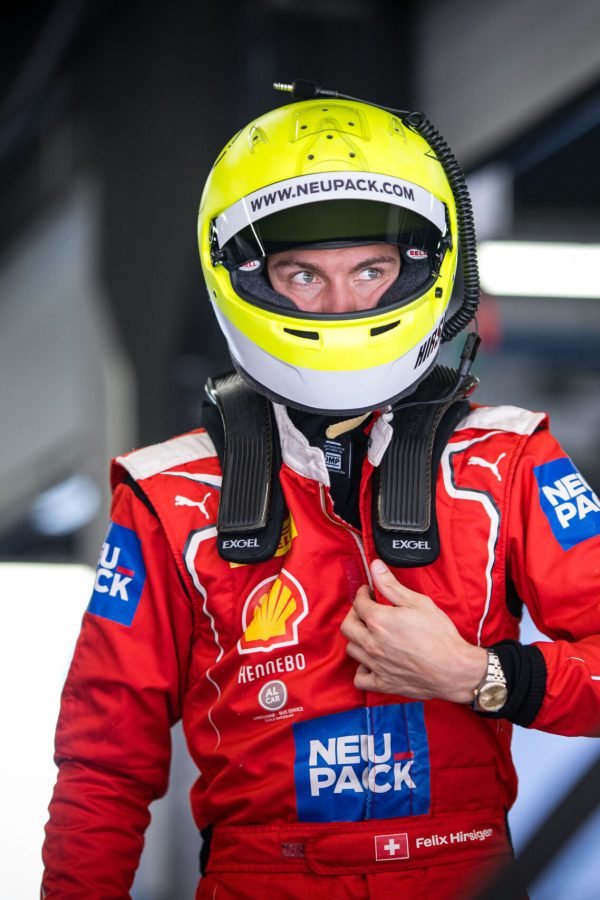
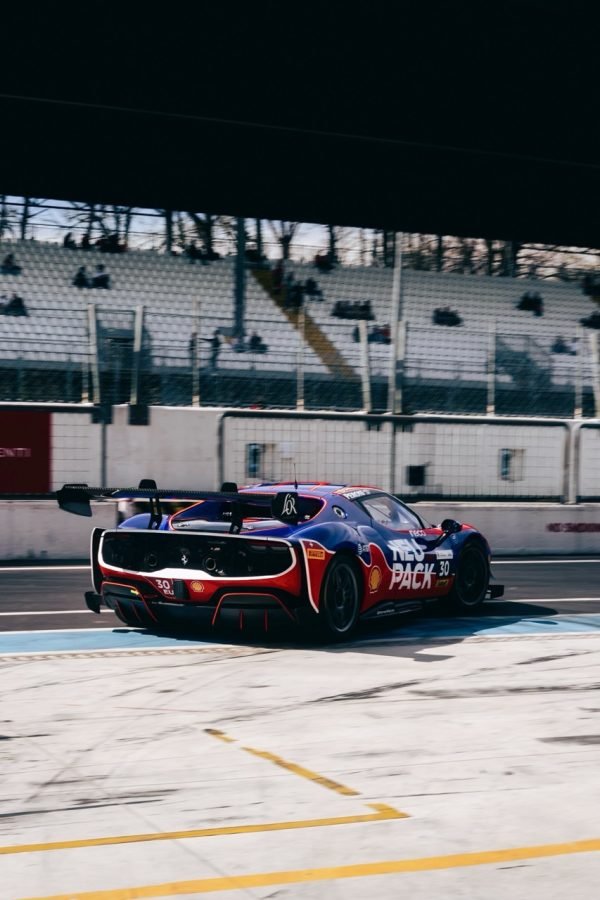
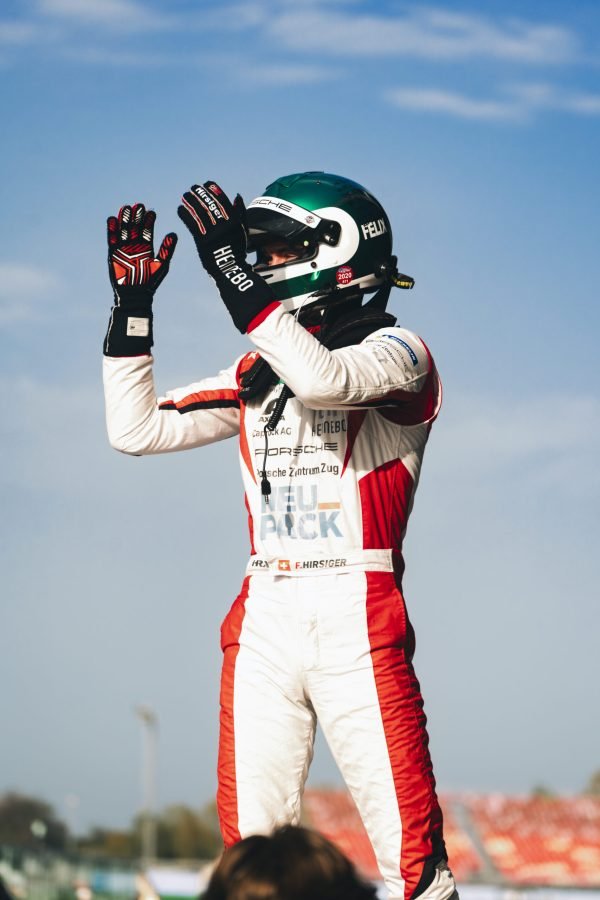
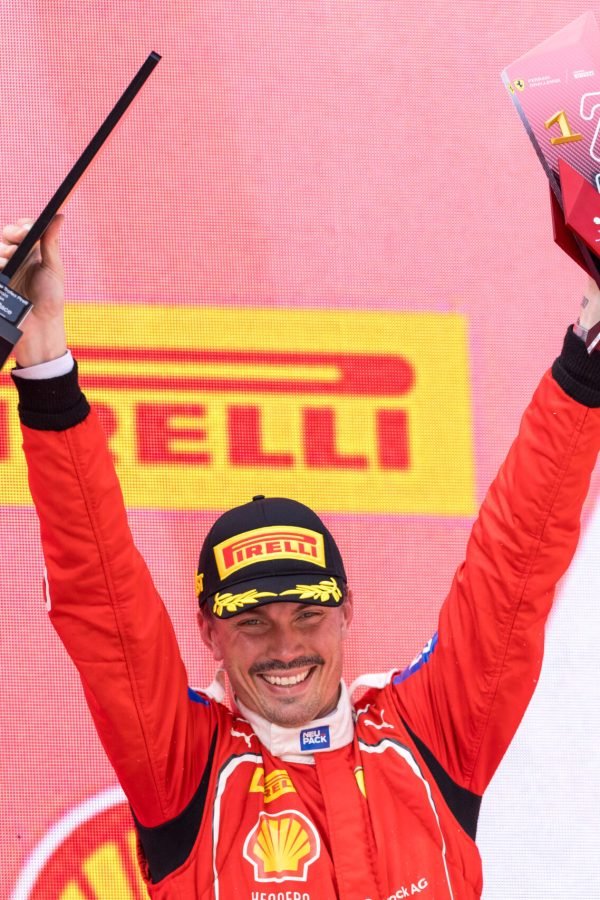
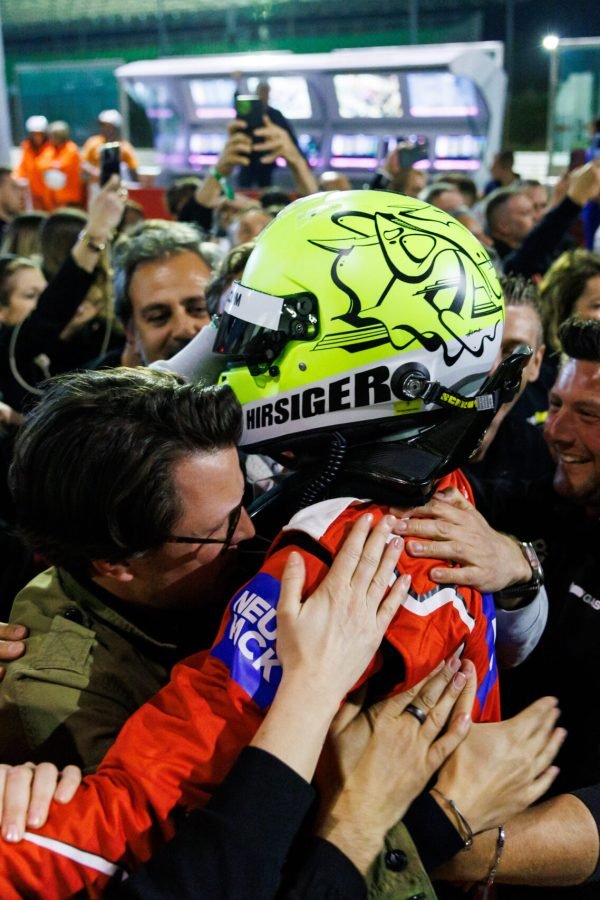
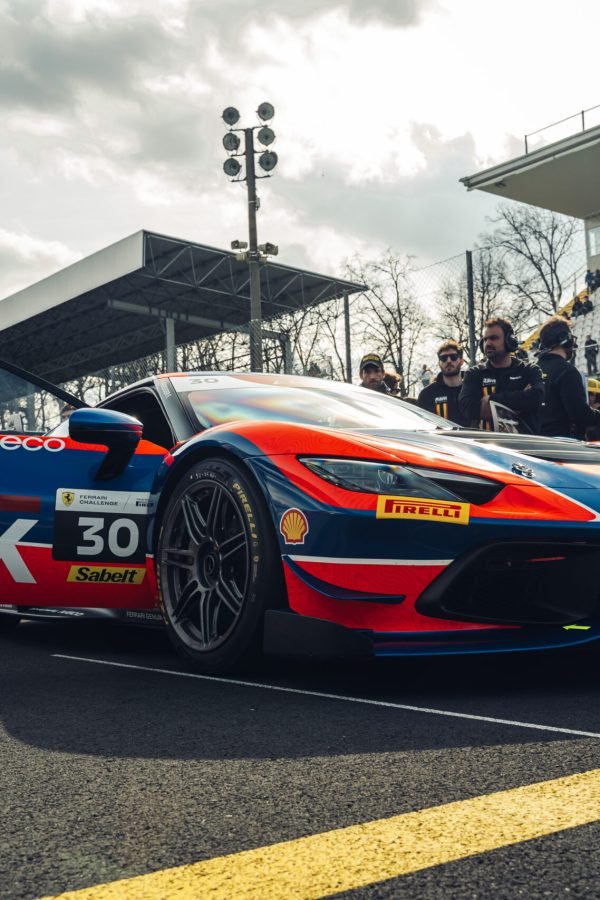
Picture Credit: Courtesy of Felix Hirsiger
Processing failure and creating luck
Felix’s father introduced him to racing. “He was a driver in the 80s and 90s,” Felix says. “He lost everything in a financial crisis, but he never stopped supporting us.”
Returning to competition after his father’s passing reshaped his understanding of persistence. “You create your own luck,” he says. “If it hasn’t come yet, you keep working until it does.”
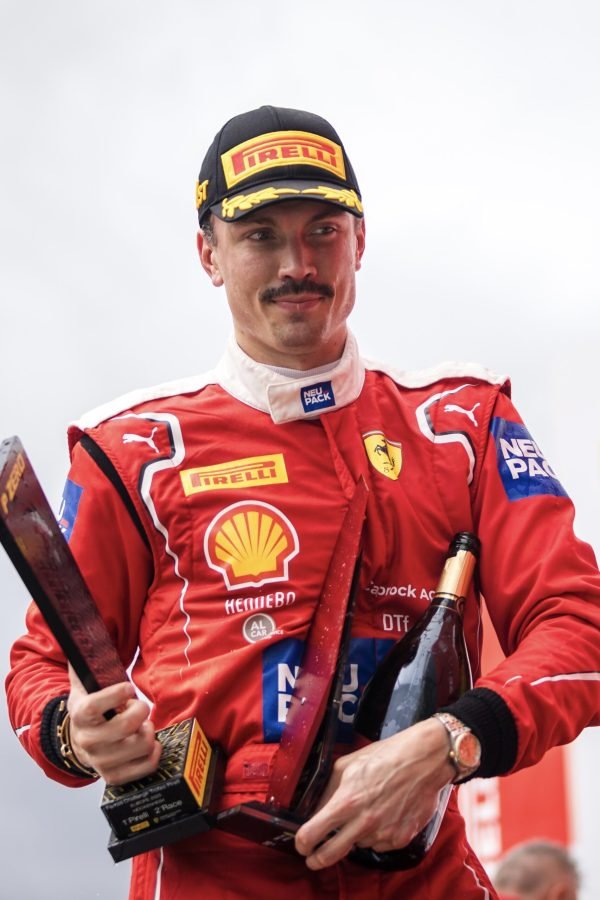
In 2024, at Monza, Felix started from pole in the Ferrari Challenge on his father’s birthday. On the last lap, his tire burst. “Maybe someone was keeping me from something worse,” he says.
That weekend was heavy. It carried both memory and momentum, the feeling of a circle closing and a new one beginning. “It reminded me why I started,” Felix said. “Sometimes you don’t win, but something still shifts inside you.”
Two weeks later at Misano, he won, becoming the GT3 Cup champion in the Porsche Sports Cup Suisse. And he kept winning.
When we spoke, Felix was still competing and leading the 2025 Ferrari Challenge. As of publishing this article, he stands as the 2025 Trofeo Pirelli Champion. The man is on the rise.
Red cars, real business
Felix now races professionally while co-owning Autocenter Holzhäusern GmbH in Switzerland. He manages sales, partnerships, and strategy, and still finds time to compete at top level.
“The entrepreneurial mindset came from racing,” he says. “Sales is performance-based and unpredictable. You need discipline.”
He left his job at Porsche to buy into the business. “We were sitting in a café when a friend and now business partner said, ‘The company’s for sale.’ I said, ‘We’ll buy it.’ I didn’t realize it would take nine months of negotiations and paperwork. But we did it.”
He describes the company’s model with calm precision. “We buy and sell cars, from everyday vehicles to luxury ones. The beautiful part is only possible because of the hard part. Without the dirty work, the beautiful stuff will not be here.”
The Swiss market, he says, is ideal for cars. “People here value quality and reliability. Exporting outside the EU is more complicated, so we focus on the market we understand best. If you keep steady turnover with middle and lower segments, everything else follows.”
The company’s motto sums up their approach: If you think it’s perfect, it’s not good enough.
“It reminds us to stay alert,” Felix says. “No one waited for us to do this. We have to earn it.
We want to thrive.”
Mental capacity, applied to business
Felix applies the same discipline from racing to business. “Pressure, long hours, fast decisions, it’s the same dynamic,” he says. “You process information quickly and stay composed. It’s the same training, just a different track.”
The transition from employee to owner taught him practical leadership. “Buying the company was the hardest thing I’ve ever done,” he says. “It taught me how to decide when there’s no clear answer. After that, everything else feels simpler.”
He enjoys the challenge. “When it’s your own thing, you don’t stop until it feels right. And even then, you want to improve it.”
Lessons in sponsorship and trust
Felix’s understanding of sponsorship evolved through experience. “We used to think sponsors just wanted a logo on the car,” he says. “They don’t. They want a story they can believe in.”
He focuses on creating experiences instead of transactions. “You have to find people who share your passion. When they experience it once: the atmosphere, the noise, the emotion, they understand it. That’s when they want to be part of it.”
It isn’t always straightforward. “There’s a big gap between people saying yes and money in your account,” he says. “I’ve had contracts signed and confirmed, and still, no payment. That’s part of the process.”
His advice to younger athletes is simple: build relationships, stay consistent, and keep your word.
Cycling, concentration, and calm
When researching for this interview, we stumbled on another Felix Hirsiger, a cyclist, and wondered if it was a coincidence. It wasn’t. “That’s me,” he laughed when asked. “I used to race bikes.”
Between 2015 and 2019, Felix took a step away from car racing. Funding was inconsistent, and he needed a way to stay competitive, both physically and mentally. “Cycling gave me structure,” he says. “It’s a sport where progress is measurable. You know what you put in, and you see what you get out.”
He carried that discipline back into motorsport. “Cycling builds endurance and focus without strain,” he says. “You learn patience and rhythm. On the bike, your mind is always active — you plan and adjust — which is exactly what you do in the car.”
Even now, he uses cycling to train the brain as much as the body. “Sometimes I ride indoors, in heat, while solving puzzles on an iPad,” he says. “It teaches you to keep calm when you’re tired. That’s when you learn the most.”
Family, humility, and gratitude
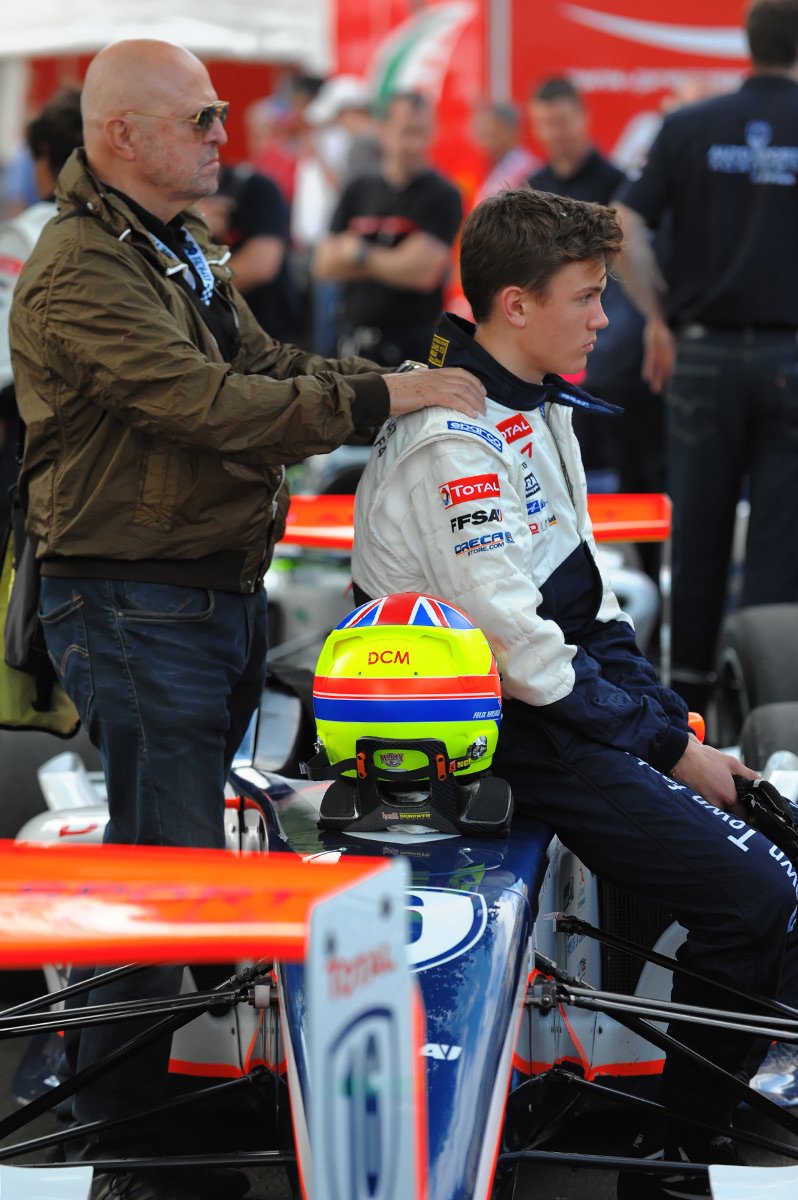
Family remains at the center of Felix’s story. His father was a racer, and the person who first put him behind the wheel. His brother supported him financially during difficult years while being a young racer. His mother still runs a small clothing store at 65. “We’re a normal family,” he says. “We work hard and look after each other. There were no shortcuts.”
Felix speaks of his mother with respect and affection. “She doesn’t talk much about what she’s done for us,” he says. “But I know everything I am comes from her and my father.”
Those values: reliability, calmness, and kindness, form the base of how he leads his team and approaches people. “If someone trusts you, you make sure they never regret it,” he says. “That’s how I was raised.”
What high performance means
When asked what a high-performance life means, Felix answers without hesitation. “High performance is having time to do what you want and seeing progress every day,” he says. “You need to see that you solved something, improved something, moved forward.”
He values impact over status. “It’s also about creating good experiences for people around you: clients, partners, family. You can’t create that if you’re not fulfilled yourself.”
When asked to describe his mindset in one word, he pauses briefly before saying, “Resilience.”
What makes Felix’ story memorable isn’t the trophies or titles – although they are very impressive indeed. It’s the way he carries belief as a practice. Something you renew every day through work, patience, and small steps forward.
You leave the conversation reminded that success doesn’t start with confidence. It starts with action, with showing up even when it’s uncertain. Felix does that and that’s why his story stays with you long after the conversation ends.